


Listen to this article:
Municipal PreK–12
Pilgrim High School
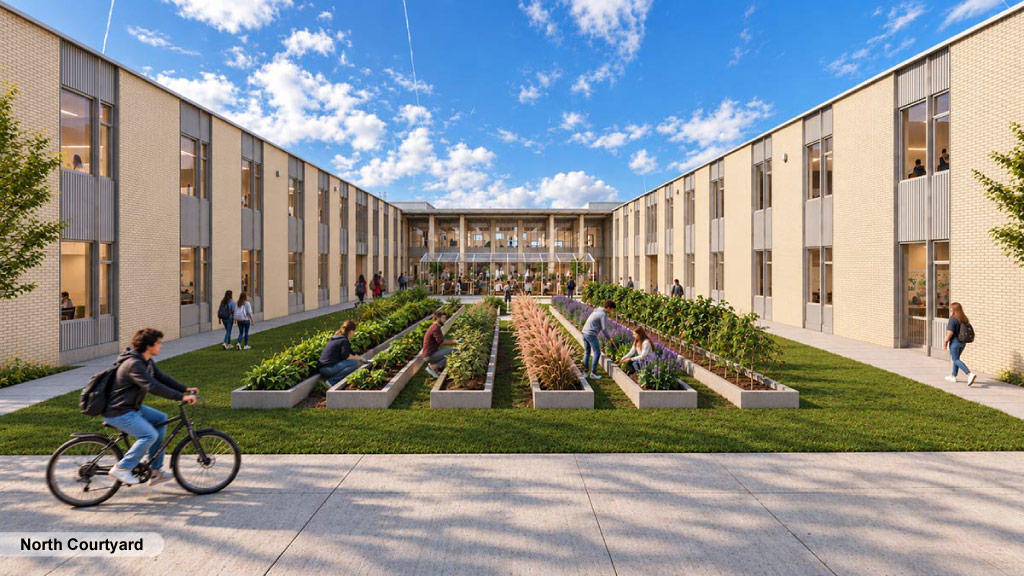
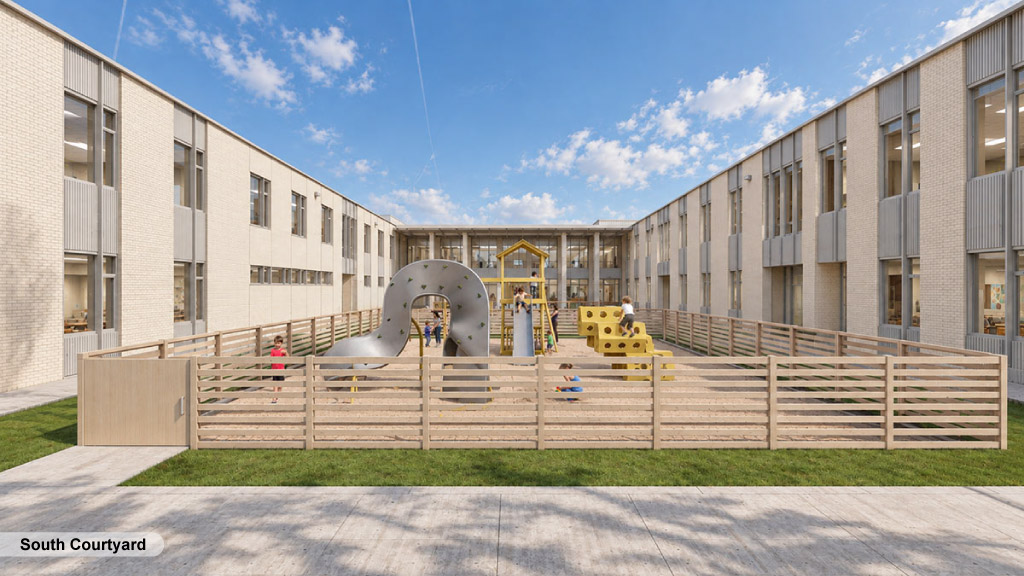
Building upon the Warwick High School Master Planning process, Saam developed the design for Pilgrim High School as a contemporary learning environment aligned with the District’s vision for a 21st-century educational facility. The project reimagines the high school as a connected, inclusive, and adaptable ecosystem, where spatial organization actively supports evolving pedagogies and diverse student experiences.
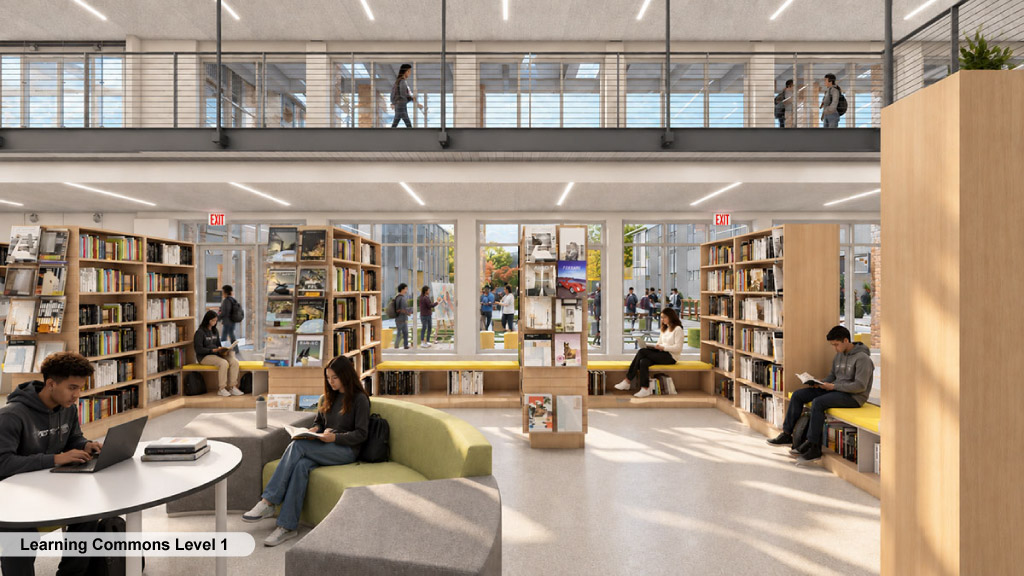
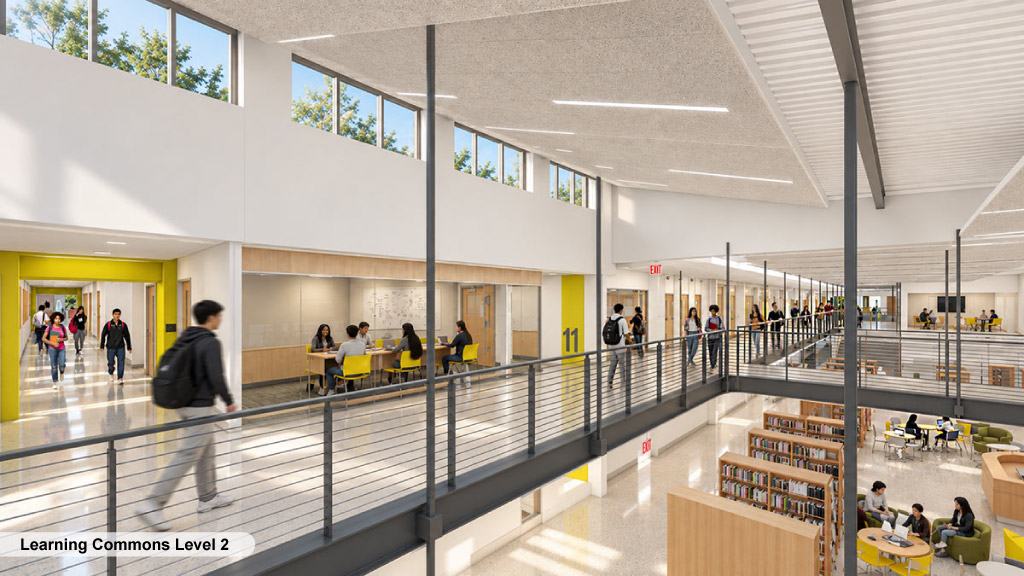
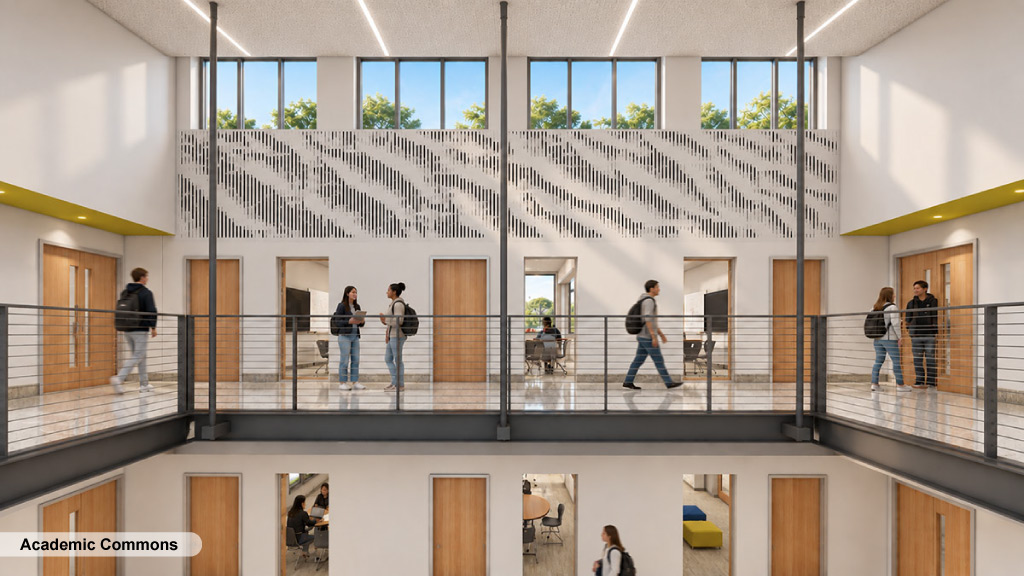
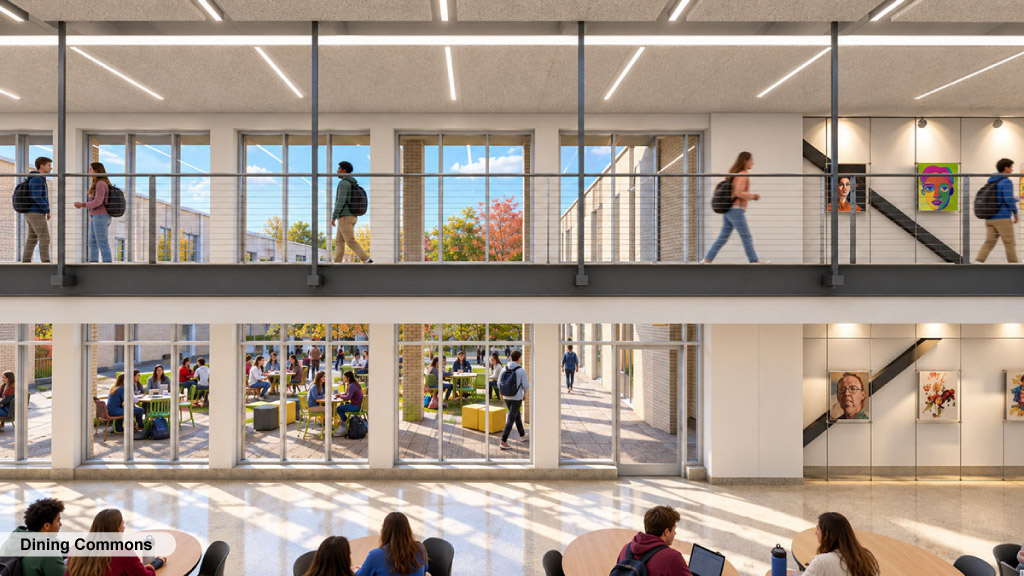
At the core of the design is the deliberate use of porosity and permeability as primary architectural tools. Visual porosity—achieved through transparency, double-height volumes, and interconnected program areas—creates a sense of openness and shared awareness across the building. This openness fosters inclusivity by allowing students to engage actively and passively with a wide range of academic and extracurricular activities. Permeability, in turn, is carefully calibrated to organize movement and access, establishing clear gradients between public, semi-public, and private zones. Together, these strategies balance openness with control, ensuring that the building remains welcoming while maintaining a high level of safety and security.
Safety is embedded within the architecture through visibility rather than isolation. Transparent boundaries, strategically positioned administrative spaces, and interconnected commons enable continuous passive supervision. Decentralized administrative functions are distributed throughout the building, allowing staff to maintain proximity to student activity and reinforcing a culture of shared responsibility and oversight. This layered approach to permeability reduces blind spots and enhances situational awareness without compromising the building’s openness.
The design also advances inclusivity as a spatial and social framework. Classrooms are organized into small, non-departmentalized learning communities, dissolving traditional academic silos and encouraging cross-disciplinary interaction. By integrating Career and Technical Education (CTE), vocational programs, and core academic subjects alongside art, music, health, and special education, the building creates an equitable platform where all forms of learning are visible and valued. The porous arrangement ensures that students are continually exposed to diverse pathways, fostering curiosity, exploration, and a shared sense of belonging.
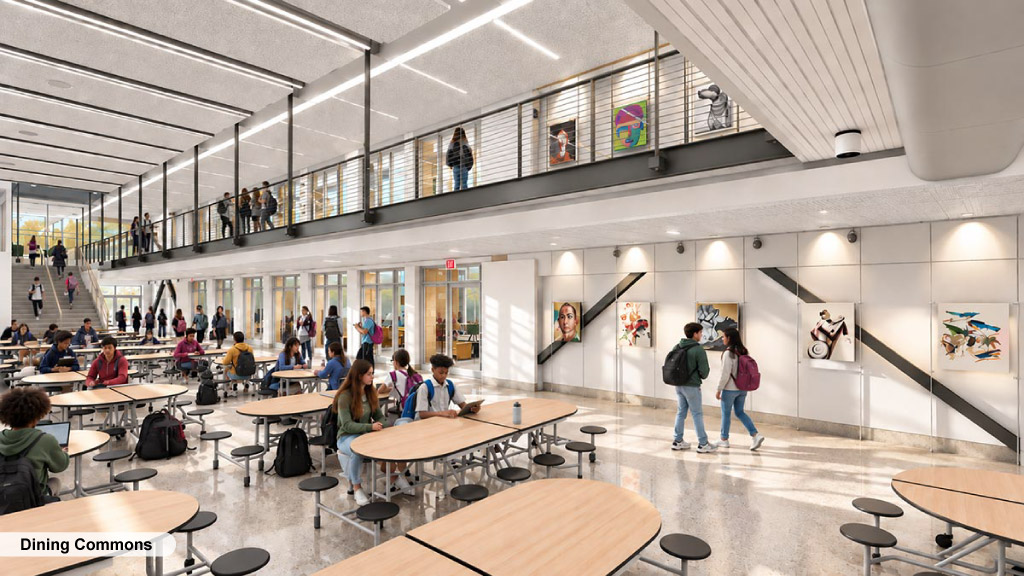
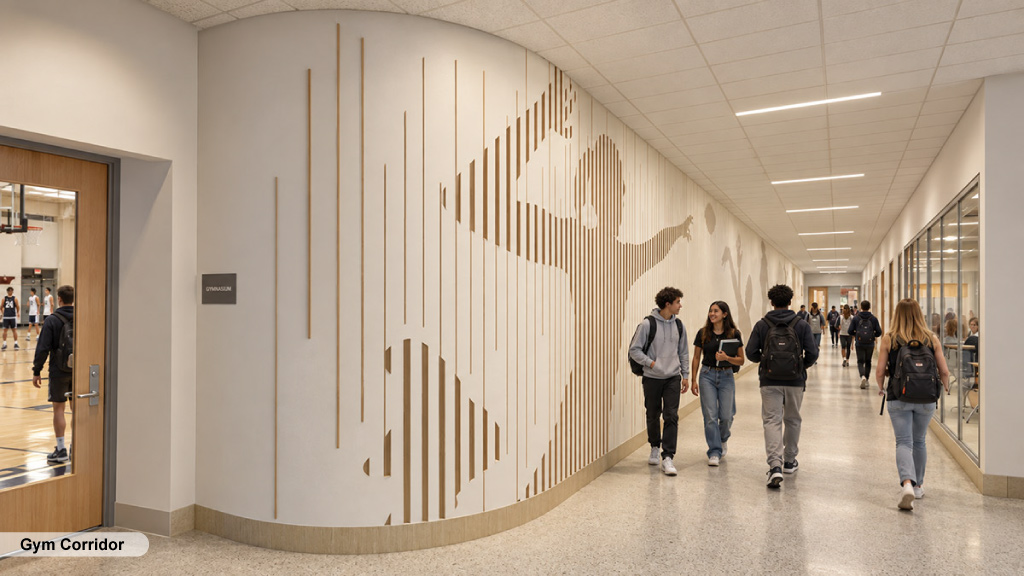
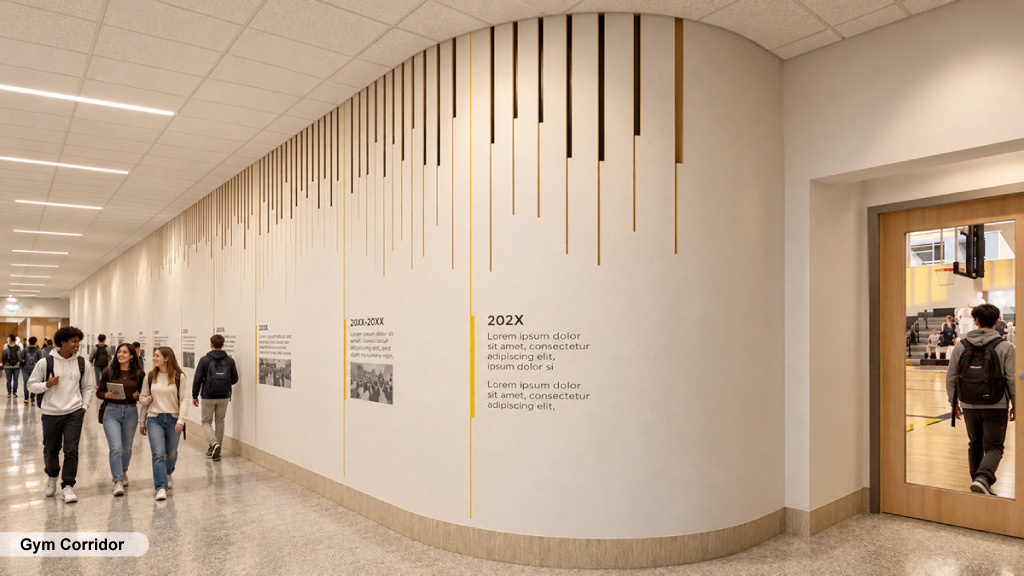
Collaboration is embedded throughout the building’s spatial logic. Circulation is reimagined as an active learning landscape, extending beyond simple movement to become a space for gathering, interaction, and informal exchange. Large common areas, including the double-height dining and learning commons, serve as multifunctional hubs that visually and physically connect activities horizontally and vertically. These spaces act as social condensers, where overlapping programs and flexible use support both structured and spontaneous collaboration.
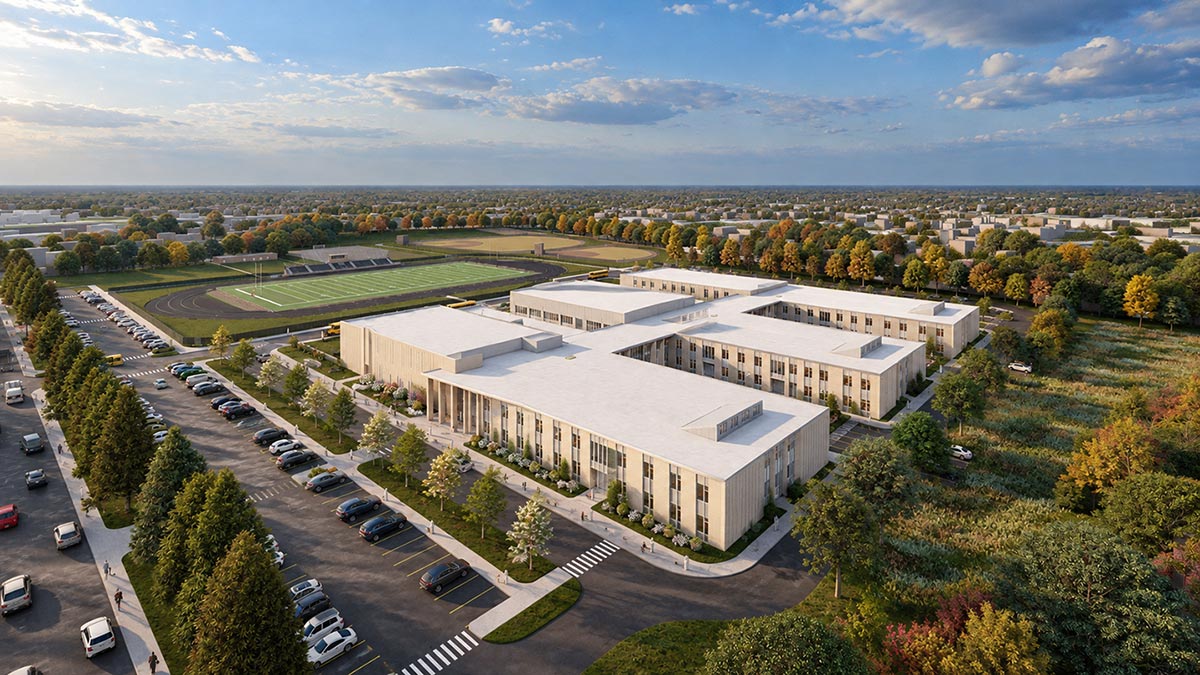
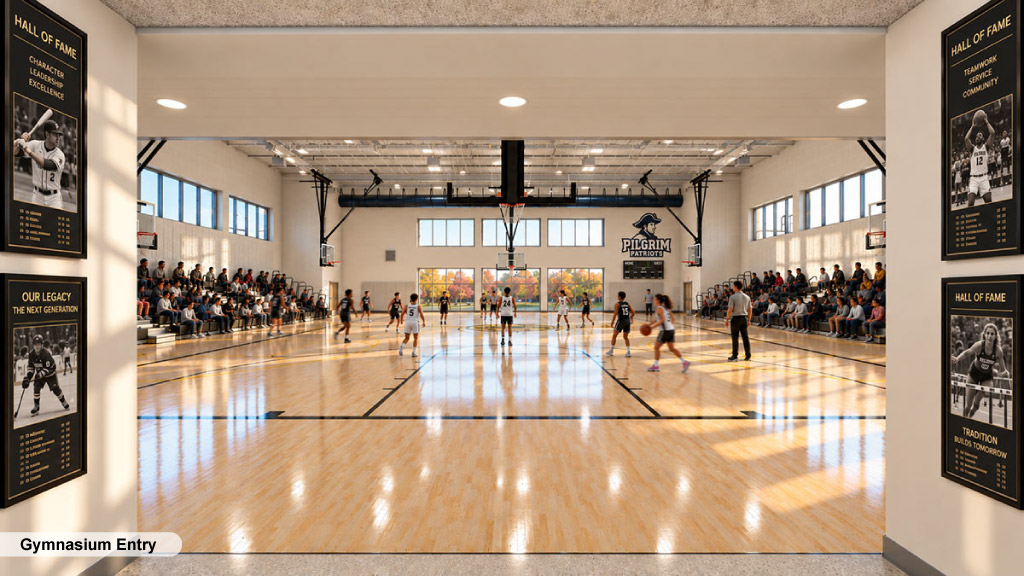
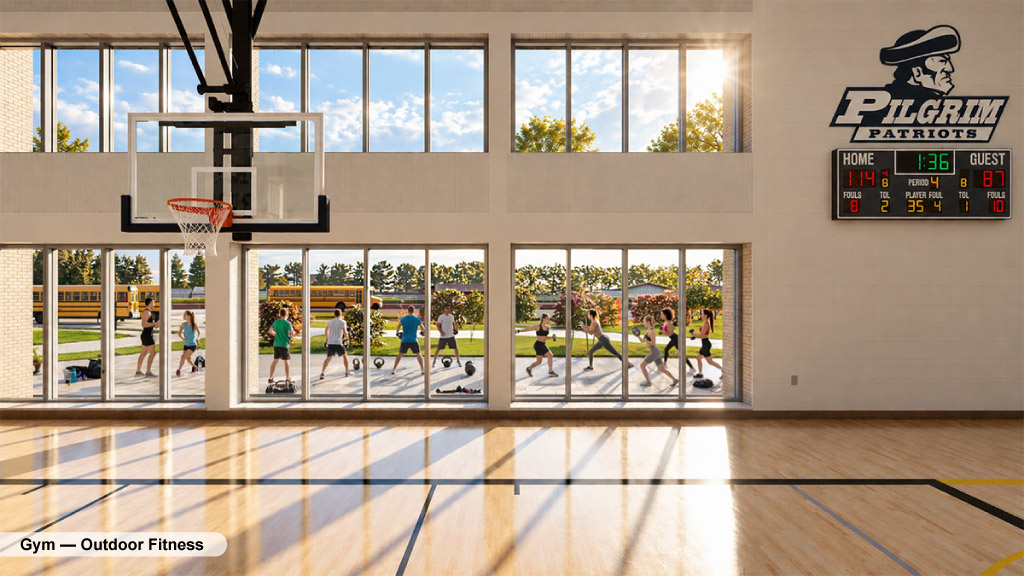
The central spine serves as the organizational backbone of the school, providing clear wayfinding while reinforcing the building’s porosity. As both an orienting device and a communal core, it delineates public and private zones while maintaining visual continuity across them. Anchored by the dining and learning commons, the spine establishes a strong internal axis that extends outward—connecting the main entrance through the gymnasium to the athletic fields beyond—linking academic, social, and extracurricular life into a cohesive whole.
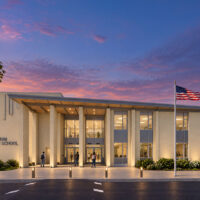
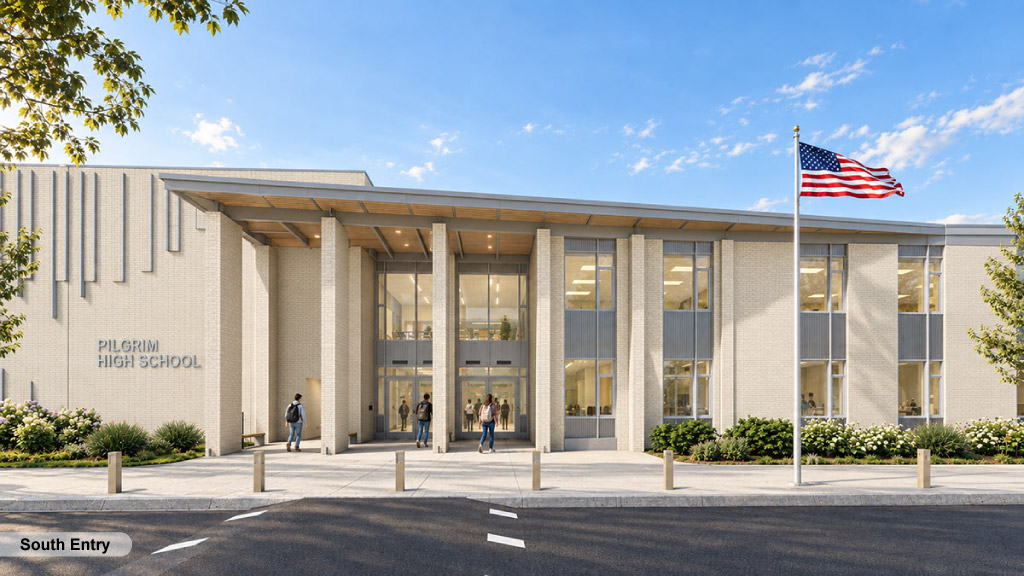
The building’s civic presence is articulated through a prominent entrance colonnade, drawing from the longstanding architectural tradition of columned porticos in public institutions. This element establishes a dignified, recognizable identity for the school, framing it as a place of collective significance within the community. The colonnade defines a clear threshold between the public realm and the institution, marking arrival as a moment of transition while reinforcing a sense of order, rhythm, and permanence. Beyond its symbolic role, it provides shelter and scale at the human level, creating a welcoming forecourt that supports gathering, orientation, and daily social interaction.
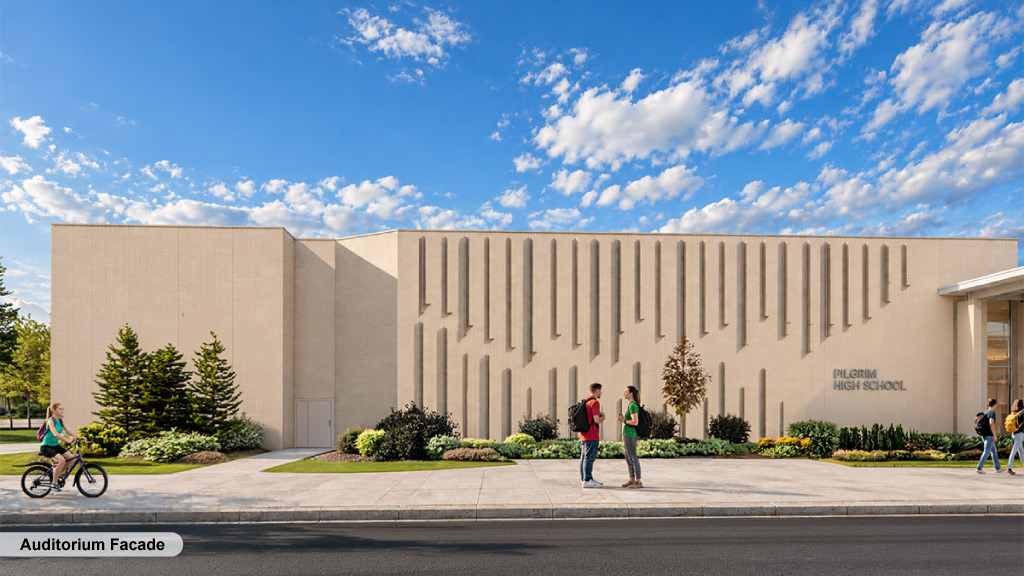
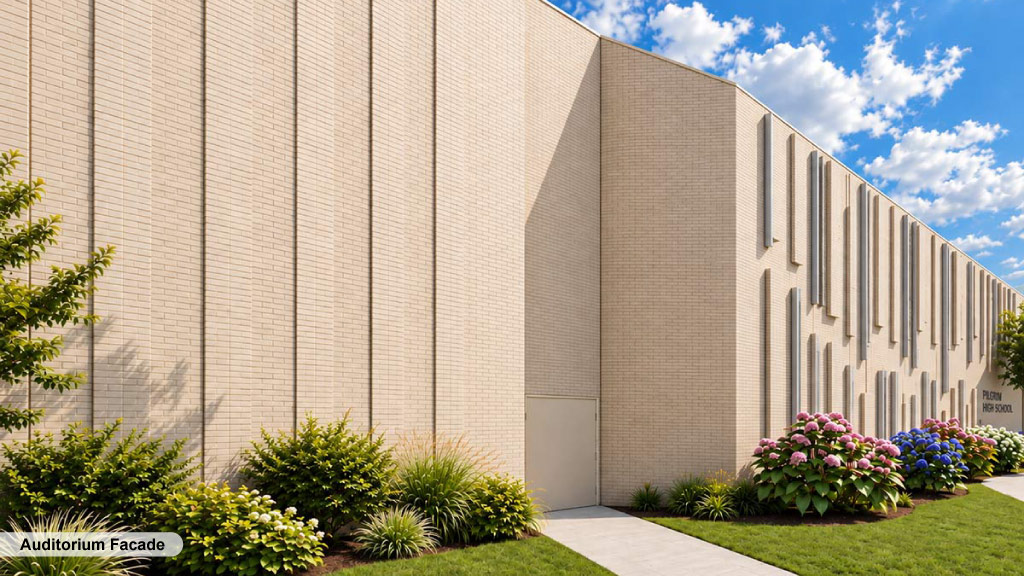
A modular approach to planning and building systems enhances flexibility, efficiency, and long-term adaptability. Standardized material strategies and simplified construction methods support sustainability goals by reducing waste, maintenance requirements, and lifecycle costs. The use of neutral tones throughout the exterior and interior references the existing school and its identity, creating continuity while allowing the life and activity of the school community to take visual prominence.
At 206,000 square feet and serving 1,147 students, Pilgrim High School is conceived as more than a building—it is a porous, interconnected learning environment that supports safety through visibility, fosters inclusivity through openness, and encourages collaboration through spatial integration. By balancing transparency with controlled permeability, the design reflects both contemporary educational values and the enduring civic role of public schools as inclusive, community-centered institutions.
- Location
Warwick, RI - Completion
2028 (est.) - Size
206,000 sf