



Crocker Elementary School
Location
Fitchburg, MA
Listen to this article:
The design of Crocker Elementary School is grounded in a vision of creating a vibrant, inclusive, and community-centered learning environment—one where architecture actively supports both educational excellence and student well-being. Set within a unique wooded site, with no surrounding buildings in view, the school draws deeply from its natural context. The landscape—defined by dense tree cover and striking granite outcrops—provides both a physical and conceptual backdrop for the design, inspiring an architecture that feels rooted, calm, and enduring.
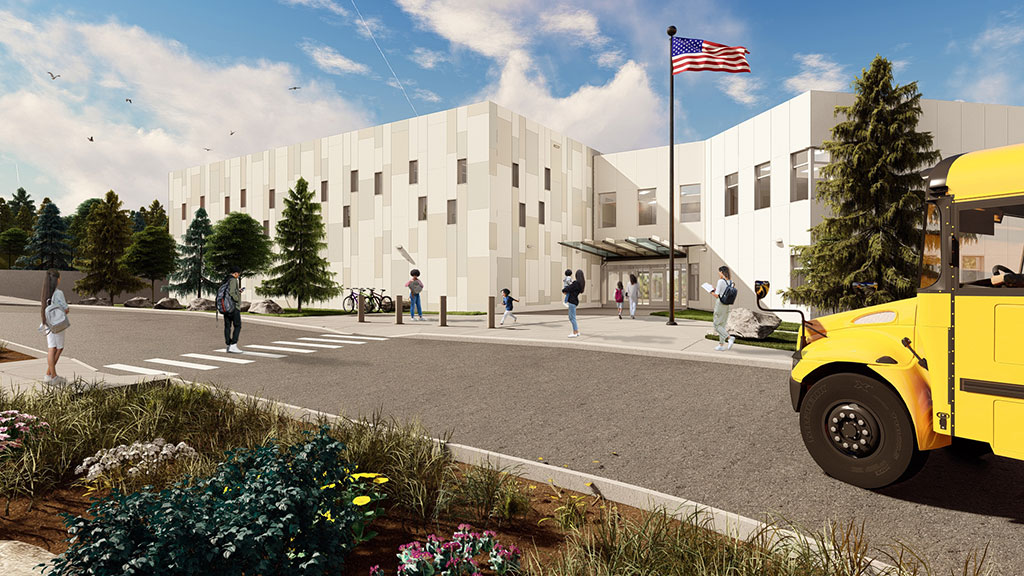
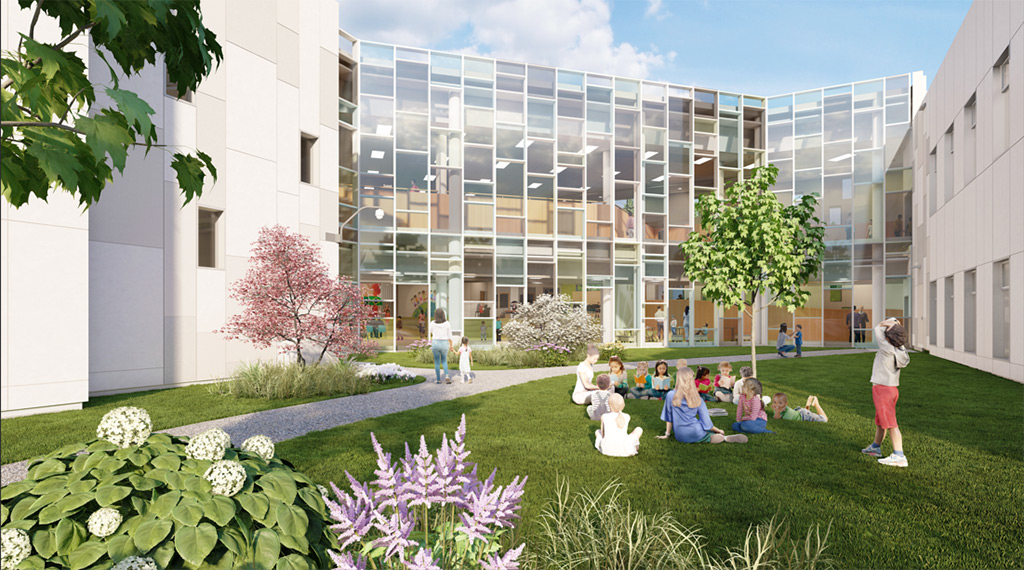
Rather than imposing itself on the site, the building is carefully situated to respond to this environment, framing views outward to the forest and embracing the presence of large trees and natural formations. This connection to nature reinforces a sense of refuge and focus, allowing students to feel both sheltered and inspired by their surroundings. The school becomes not just a place of learning, but a setting that fosters awareness, curiosity, and well-being through its relationship to the landscape.
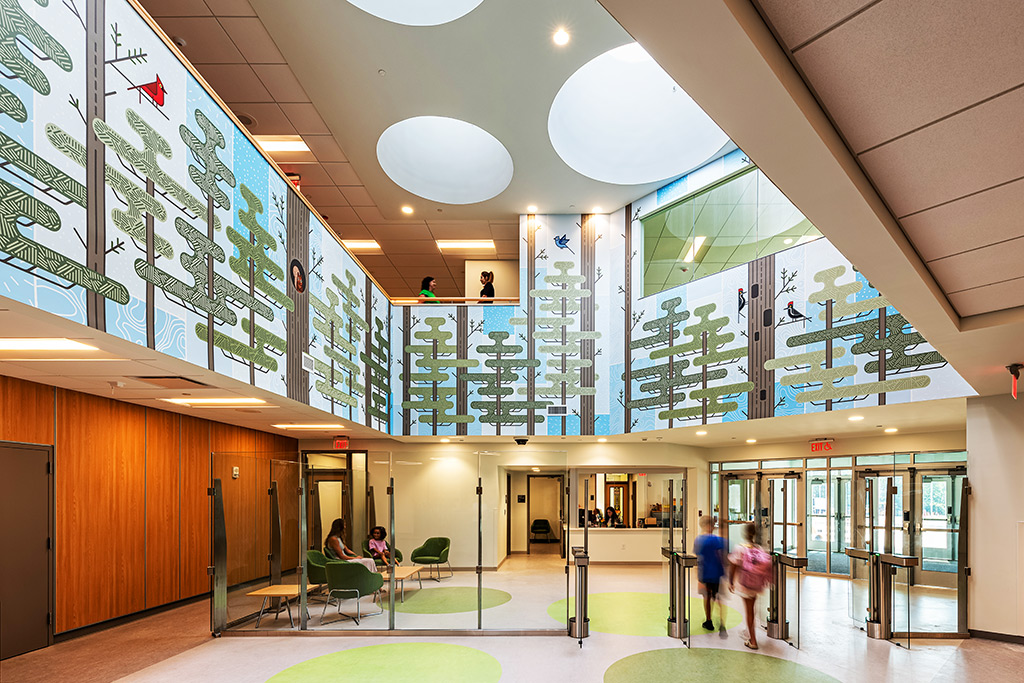
From the moment of arrival, the school establishes a strong sense of clarity and security. The main entrance is carefully positioned and directly connected to the site’s bus loop and parking areas, creating a safe and intuitive point of access. Visitors are guided through a controlled entry sequence, where administrative spaces provide immediate oversight and supervision. This layered approach ensures that the building remains welcoming while maintaining a high level of safety. At the same time, the design allows key public areas to operate independently, enabling community use without compromising the security of the academic wings.
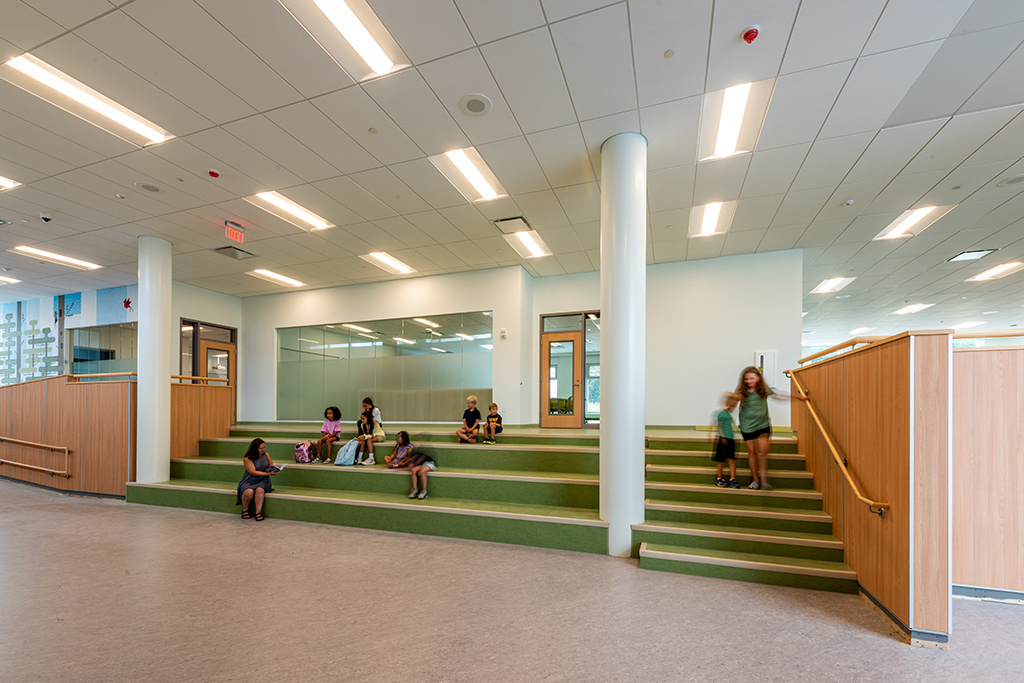
Once inside, movement through the building is defined by a central circulation spine that organizes the plan and simplifies wayfinding. This primary axis connects the school’s most important shared spaces, reinforcing a sense of cohesion and making the building easy to navigate for students, staff, and visitors alike.
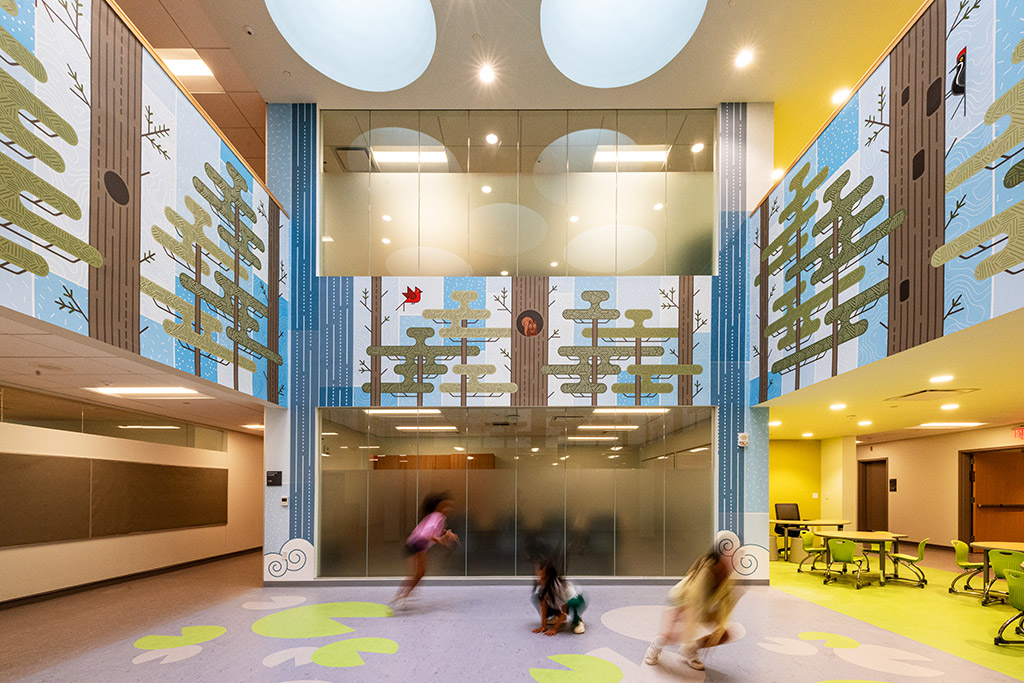
Complementing the architecture, an integrated environmental graphics approach extends the school’s connection to its natural surroundings. Inspired by the local landscape, large-scale graphics depicting native flora and fauna animate corridors and shared spaces, while ocean-themed graphics in the gymnasium celebrate the native marine plants and animals of New England’s coastal environment. Together, these elements reinforce wayfinding, strengthen the school’s identity, and create a cohesive visual connection between the building and its surrounding landscape.
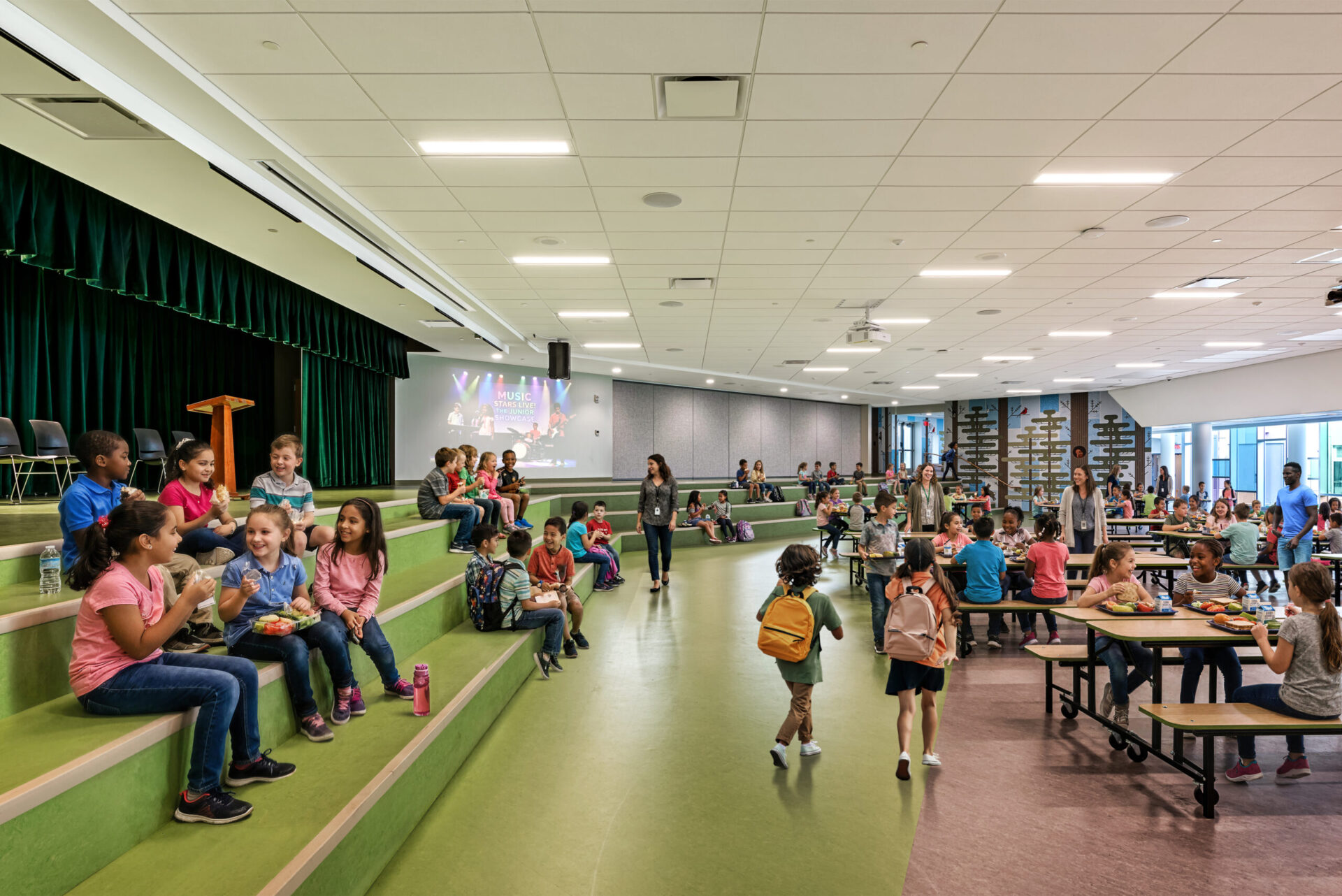
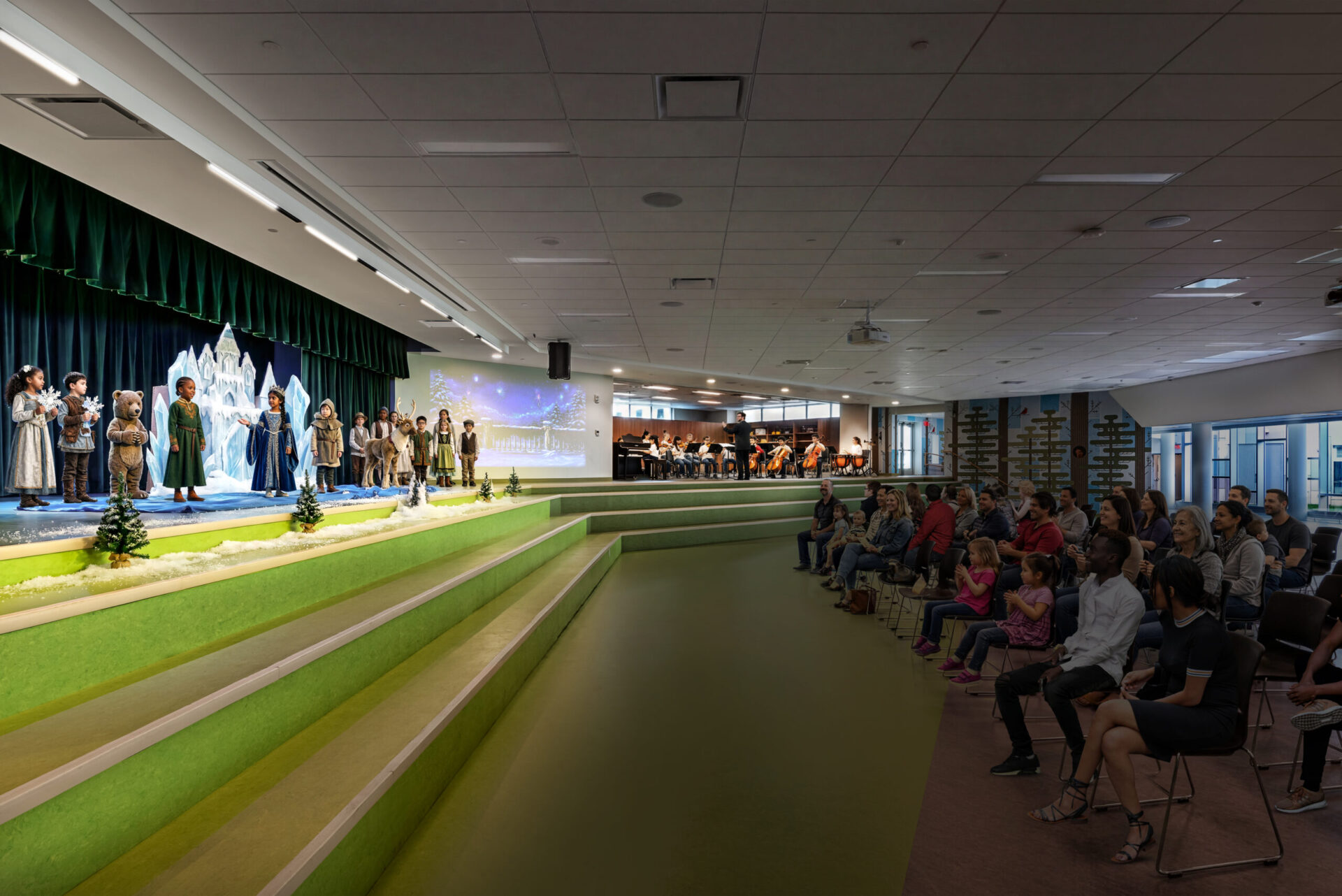
At the heart of the first floor, the cafetorium emerges as a dynamic, multifunctional hub. Positioned along the main circulation route and adjacent to the gymnasium, it serves as both a daily gathering space and a venue for larger school and community events. Its central location ensures that it is equally accessible from all parts of the building, while its proximity to the entrance allows it to be used after hours without opening the entire school. The cafetorium is not simply a place to eat—it is a social anchor where the life of the school unfolds, supporting assemblies, performances, and shared experiences. Its relationship to outdoor spaces further enhances its flexibility, allowing activities to extend beyond the building and strengthening the connection to the surrounding landscape.
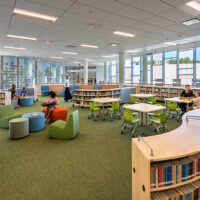
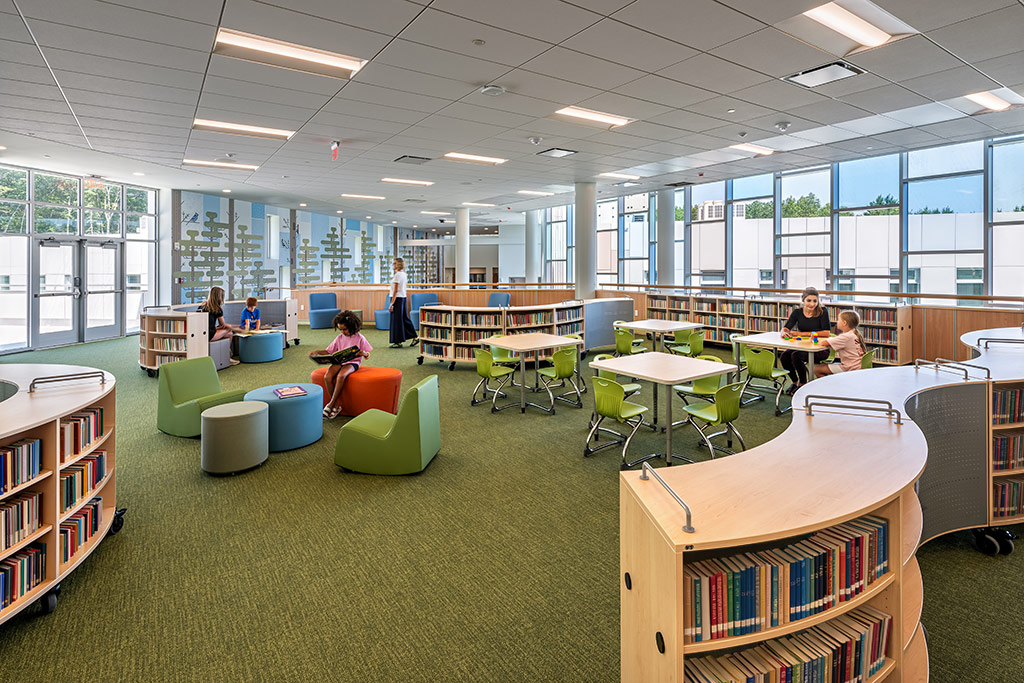
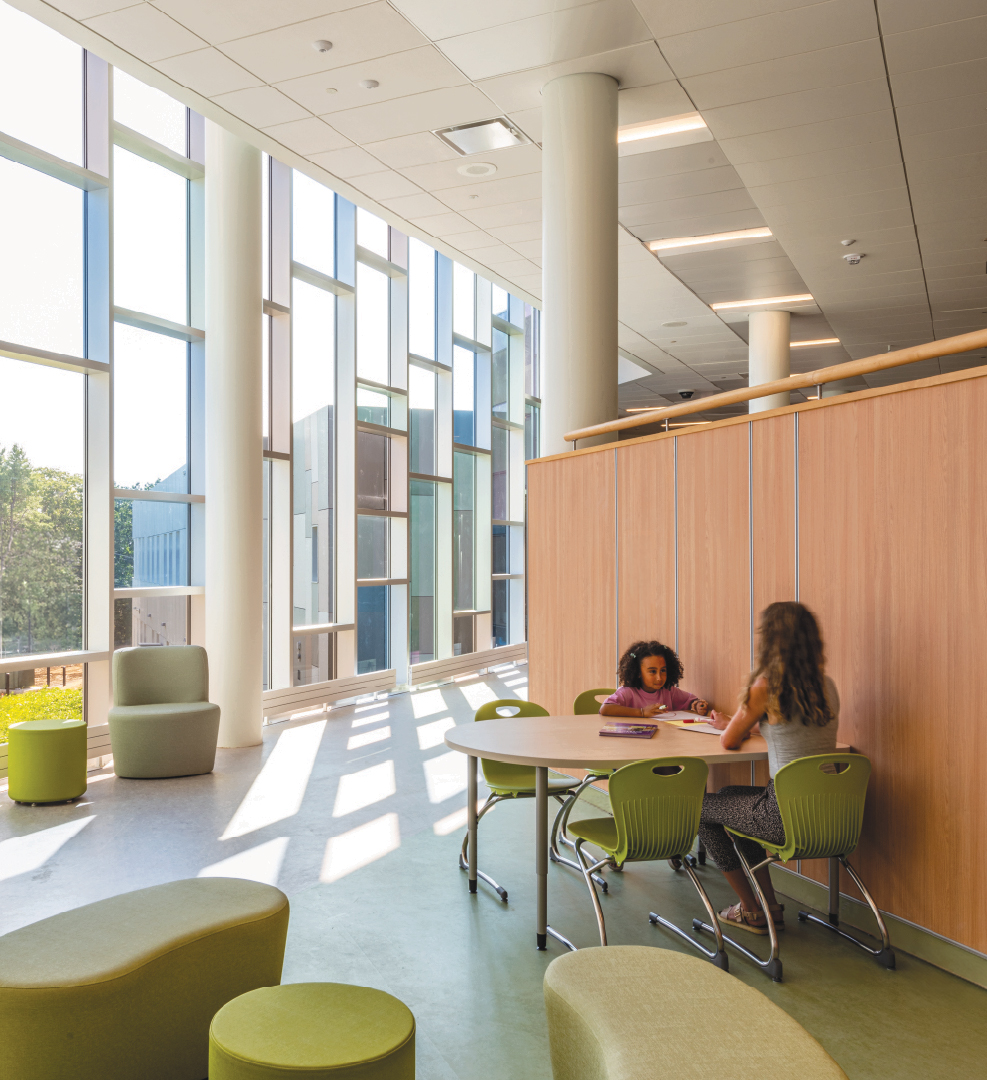
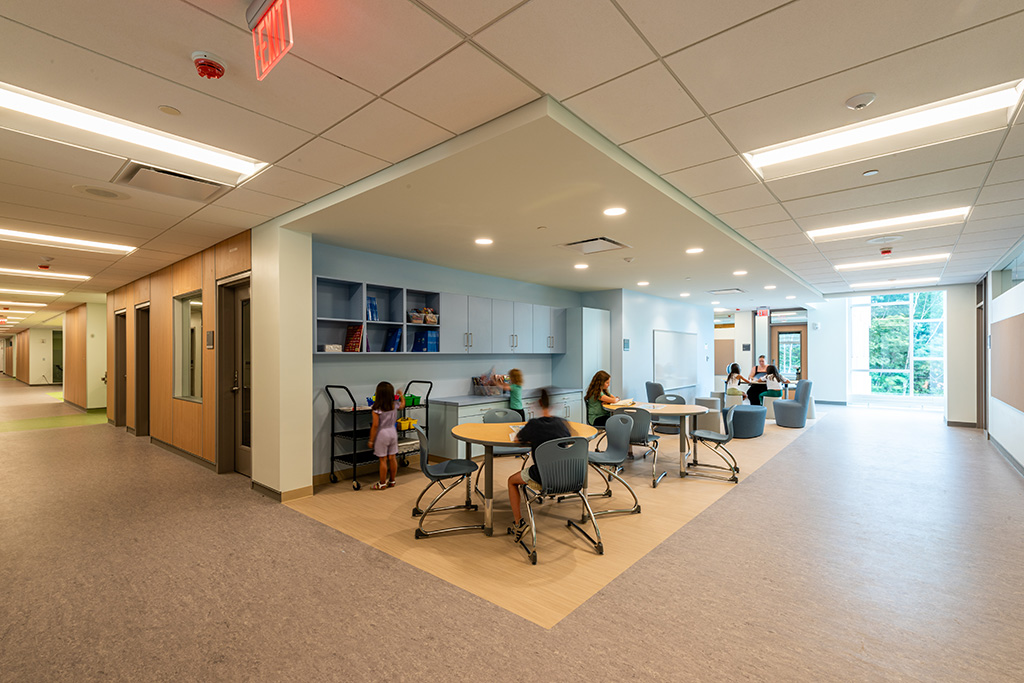
Above, on the second floor, the media center continues this idea of a centralized hub, but in an academic sense. Located at a key intersection between classroom clusters, it functions as a modern learning commons—an open, flexible space that encourages collaboration, exploration, and informal learning. Rather than being isolated, the media center is embedded within the daily flow of the school, making it a natural extension of the classroom. Its central placement ensures equal access for all students, while its openness promotes visibility, interaction, and a sense of shared ownership. Here, too, the connection to the wooded setting is ever-present, with views outward reinforcing a calm and focused learning atmosphere.
Together, these two spaces—the cafetorium and the media center—form complementary anchors within the building. One supports social connection and community engagement, while the other fosters intellectual curiosity and academic growth. Both are unified by their centrality, flexibility, and accessibility, and both are enriched by their connection to the natural environment.
Ultimately, the design of Crocker Elementary School reflects a careful balance between openness and control, flexibility and clarity, community and security. Anchored within a remarkable natural setting, the building draws strength and identity from its surroundings—echoing the permanence of granite, the rhythm of the trees, and the quiet presence of the forest. Through thoughtful planning and spatial organization, it creates an environment that is welcoming, adaptable, and inspiring—one that supports students not only in how they learn, but in how they connect, grow, and thrive.
To celebrate the completion of Crocker Elementary School, we designed The Critters of Crocker, a coloring booklet featuring illustrations inspired by the school’s environmental graphics. Created as a gift for students, the booklet offers a playful extension of the project’s visual identity. Flip through the digital version below.
Photos © Christian Phillips Photography
- Location
Fitchburg, MA - Completion
2025 - Size
116,000 sf